
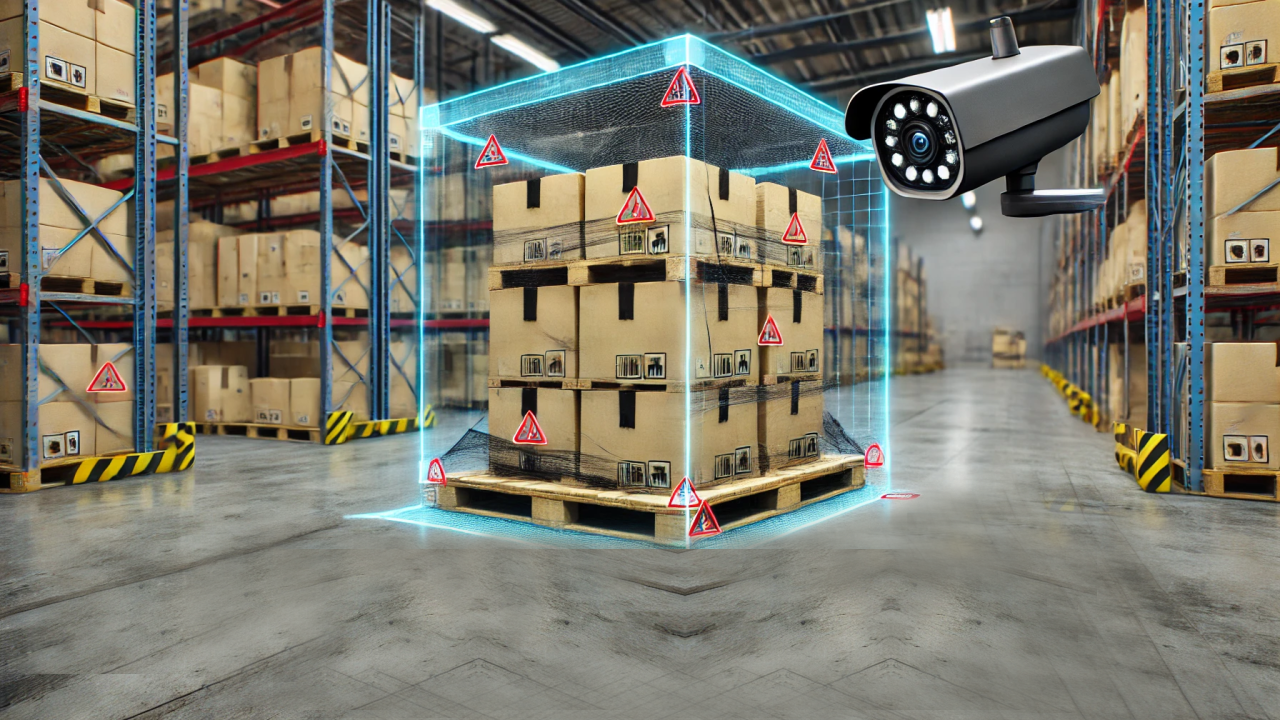
It’s 2:15 AM at a large distribution warehouse.
The facility is quiet. Trucks that unloaded inventory hours earlier sit parked near the loading docks. Inside the warehouse, rows of shelves stretch across thousands of square feet, holding everything from electronics to consumer goods.
A security camera captures a figure moving slowly near a restricted inventory zone.
In a traditional surveillance setup, the camera would simply record the footage. Unless someone happened to be watching the screen at that moment—or reviewed the recording later—the activity might go unnoticed.
But in a warehouse equipped with AI-powered surveillance, something very different happens.
Within seconds, the system recognizes the unusual movement pattern. An automated alert is sent to the security dashboard and the facility manager’s phone. Security personnel respond immediately, preventing what could have become a costly incident.
This is the quiet but powerful transformation happening across modern logistics facilities.
Warehouses are no longer relying on cameras that only record events. They are adopting intelligent systems that actively understand what is happening in real time.
The Growing Security Challenge in Modern Warehouses
Warehouses today operate at a scale that would have been unimaginable just a decade ago.
Driven by global e-commerce growth, supply chains have become faster, larger, and more complex. A single distribution center may process thousands of shipments daily while managing inventory worth millions of dollars.
With this scale comes increased risk.
According to industry estimates, inventory shrinkage costs businesses billions of dollars globally each year, with warehouses and distribution centers being common points of vulnerability.
Security risks often arise from:
- Unauthorized access to restricted zones
- Internal or external inventory theft
- Poor visibility across large facilities
- Safety violations around heavy machinery
- Unmonitored vehicle activity in loading areas
Traditional CCTV systems were designed primarily for recording evidence after an incident occurs. What warehouses now need is the ability to detect and respond to risks as they happen.
This is where AI-powered video analytics for logistics systems are changing the game.
What Makes AI Surveillance Different?
At first glance, an automated warehouse theft detection system may look similar to traditional security infrastructure—cameras installed across entrances, aisles, and loading docks.
The real difference lies in what happens behind the scenes.
Using computer vision and artificial intelligence, these systems analyze video streams continuously, identifying patterns, behaviors, and anomalies in real time.
Instead of simply storing footage, AI systems interpret events such as:
- Unauthorized entry into restricted areas
- Suspicious activity near valuable inventory
- Unsafe employee behavior
- Loitering in sensitive zones
- Vehicle movement around loading docks
This means warehouses no longer depend solely on human operators to monitor dozens of camera feeds simultaneously. The AI acts as an always-alert digital observer, identifying risks instantly.
A Day Inside an AI-Enabled Warehouse
To understand the impact of AI surveillance, imagine a typical day inside a large warehouse.
Morning: Managing Entry Points
As employees arrive and trucks begin unloading goods, multiple entry points become active. AI systems automatically monitor these zones, identifying every movement across gates, doors, and loading docks.
If someone attempts to enter a restricted area without authorization, the system flags the activity instantly.
Midday: Monitoring Inventory Zones
Did you know? Global inventory shrinkage costs businesses billions annually; AI can detect these patterns before the shift ends.
During peak operations, hundreds of items are being moved across the warehouse floor.AI-powered analytics track unusual activity around high-value inventory areas. If goods are moved in unexpected ways or outside designated processes, the system can alert supervisors immediately.
This provides warehouse managers with real-time operational visibility that traditional systems cannot offer.
Afternoon: Ensuring Workplace Safety
Warehouses are high-risk environments. Forklifts move between aisles, heavy loads are lifted, and employees operate near machinery.
AI surveillance helps detect safety violations such as:
- Missing protective equipment
- Unsafe forklift driving patterns
- Entry into hazardous zones
These alerts allow supervisors to address potential risks before they result in accidents.
Night: Protecting After-Hours Operations
When operations slow down and most employees leave, security risks increase.
AI surveillance continues monitoring the facility overnight, detecting unusual motion, loitering, or unauthorized access attempts.
Instead of relying on manual patrols alone, the system becomes a 24/7 intelligent guard, watching every corner of the facility.
Beyond Security: Operational Intelligence
One of the most surprising benefits of AI surveillance is that it does more than just protect assets.
By analyzing video data across operations, these systems provide insights that help warehouses run more efficiently.
Warehouse managers gain the ability to:
- Search video footage instantly based on events or timestamps
- Monitor traffic flow across loading docks
- Identify operational bottlenecks
- Improve workforce safety compliance
In other words, surveillance evolves from a passive security tool into a strategic operational asset.
How FastEdge.AI Helps Warehouses Move Toward Intelligent Surveillance
As organizations modernize their warehouse infrastructure, technology providers play a crucial role in enabling intelligent monitoring.
FastEdge.AI delivers AI-powered video analytics that transform existing camera networks into smart surveillance systems capable of detecting activity, analysingbehavior, and generating real-time alerts.By processing video at the edge (on-site), the solution reduces bandwidth costs and ensures alerts are sent in seconds rather than minutes.
Key capabilities include:
- Real-time threat detection
- Automated alert systems
- Vehicle monitoring and analytics
- Centralized security dashboards
- Seamless integration with existing camera infrastructure
These solutions help warehouses strengthen security while gaining deeper operational visibility across their facilities.
The Future of Warehouse Security
The evolution of warehouse security is only beginning.
As AI technology continues to advance, surveillance systems are expected to move beyond detection toward predictive intelligence, identifying risks before they occur.
Future capabilities may include:
- Predictive alerts based on behavioral patterns
- AI-driven safety compliance monitoring
- Automated risk detection across large warehouse networks
- Integration with warehouse management systems and logistics platforms
For organizations managing large-scale supply chains, intelligent surveillance will soon become a fundamental part of warehouse infrastructure.
Conclusion
Warehouses have long relied on cameras to record events. But in an era of complex global supply chains, recording is no longer enough.Modern facilities require systems that can understand activity, detect risks, and enable immediate response.
AI-powered surveillance delivers exactly that.
By transforming traditional camera networks into intelligent monitoring systems, solutions like those offered by FastEdge.AI are helping warehouses become safer, smarter, and more resilient.Ready to see what your existing cameras are missing? Contact FastEdge.AI today for a custom security audit and see how our seamless integration can modernize your facility.
And in a world where every shipment, every pallet, and every second matters, that intelligence makes all the difference.

Comments are closed