
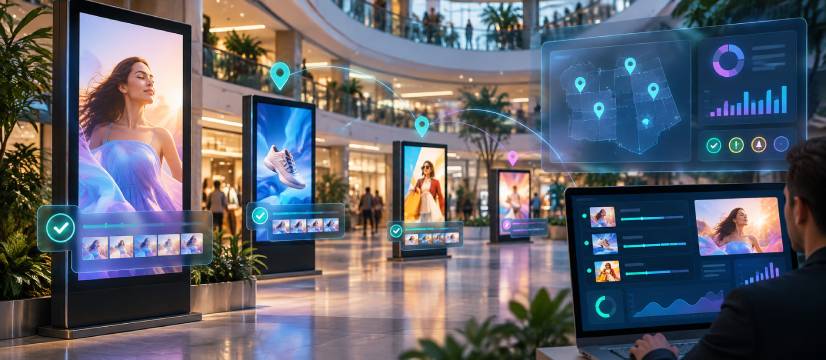
The campaign looked perfect—until the advertiser asked for proof
Imagine a retail media network running a month-long promotion across 50 digital screens in shopping centres and stores. The campaign plan looks impressive: carefully selected locations, attractive creative, and a schedule designed to reach shoppers throughout the day. At the end of the month, the advertiser asks a simple question: “Can you show us exactly where and when our ads played?”
The team checks its playlist and campaign calendar. Everything was scheduled—but a schedule is not the same as evidence. One screen may have lost connectivity, another may have been switched off during maintenance, and a third may have stopped displaying content without anyone noticing. The campaign may have been planned correctly, yet its actual delivery could tell a different story.
This is where digital signage ROI becomes more than a budget calculation. For digital out-of-home (DOOH) operators, retailers and advertisers, return on investment depends not only on creative quality or screen locations, but also on reliable delivery, visibility into operations and credible performance reporting.
Why digital signage ROI needs better evidence
Digital signage can help brands communicate offers, promote products and reach audiences in physical environments. But when a network spans many screens and locations, manual checks quickly become impractical. Teams need to know whether content played as planned, whether displays remained operational and where delivery fell short.
Digital signage analytics software brings these operational signals into a more useful view. Rather than relying on assumptions or scattered spreadsheets, teams can review playback information, screen status and campaign activity from a central dashboard. This makes it easier to investigate issues, report delivery clearly and make informed decisions about future campaigns.
For advertising networks, that transparency can strengthen client confidence. For retailers and multi-location businesses, it can reduce the time spent checking screens individually and help ensure that promotions are delivered consistently.
1. Proof of play: confirm what actually ran
Digital signage proof of play records when content plays, and can associate playback with a screen, location, campaign, date and time. It helps answer practical questions: Did the summer promotion run at every store? Was the correct creative displayed during the planned daypart? How many plays were recorded for a particular campaign?
This distinction matters. Content being uploaded or scheduled does not, by itself, prove that it played on a display. Proof-of-play reporting gives operators a clearer record to review with advertisers, franchise teams or internal stakeholders. It can also help identify gaps between planned and recorded delivery so teams can investigate and address them.
However, proof of play has an important limit: it confirms playback, not that a person saw or paid attention to an advertisement. Audience reach, viewability and attention require separate measurement methods. Keeping these metrics distinct makes DOOH campaign reporting more credible.
2. Remote monitoring: find screen problems before they become reporting problems
A screen that goes offline can quietly undermine a campaign. If nobody notices until the end of the month, the operator may lose valuable airtime, spend time resolving a client complaint and struggle to reconstruct what happened.
Screen monitoring software helps teams check device status, uptime and network connectivity across a distributed network. Centralized alerts and remote-management tools can help operators identify issues sooner, investigate the cause and take appropriate action without sending someone to every location for a routine check.
For a business managing screens across multiple stores, campuses, restaurants or public venues, remote screen management can also simplify everyday operations. Teams can organize displays by location, schedule content centrally and respond to problems from one platform. The result is a more manageable network and fewer blind spots in campaign delivery.
3. Real-time analytics: turn operational data into better decisions
Reports are most valuable when they help teams decide what to do next. Real-time analytics can bring playback activity and screen health into one view, helping operators spot unusual drops in plays, compare delivery across locations and investigate recurring downtime.
For example, if one store records fewer campaign plays than similar locations, the team can check its device status, schedule and playback history. If a screen repeatedly goes offline during peak shopping hours, the operator can prioritize a connectivity or maintenance review. If a campaign performs consistently across the network, that evidence can support clearer reporting and more informed planning.
Over time, digital signage performance analytics can help teams improve operational processes, refine schedules and make campaign reviews more useful. When available and appropriately integrated, playback data can also be considered alongside audience measurement, footfall trends or sales data. These additional signals can help assess business impact—but correlation alone does not prove that an advertisement caused a change in sales.
4. What should a useful DOOH campaign report include?
A clear report should make it easy for a client or decision-maker to understand what was delivered and what needs attention. Depending on the platform and campaign setup, useful reporting may include
- Campaign and creative details, including the reporting period.
- Playback records by screen, location, date and time.
- Plays delivered compared with the planned schedule or contracted target.
- Screen uptime, offline periods and relevant device alerts.
- Exceptions or delivery gaps that require investigation.
- A clear distinction between recorded playback, measured audience data and estimated impressions.
Consistent definitions matter. A play count should not be presented as a viewer count, and estimated impressions should be labelled as estimates with their methodology explained. Transparent reporting sets realistic expectations and helps advertisers evaluate delivery on a sound basis.
How EdgeSkope Digital Signage supports accountable screen management
EdgeSkope Digital Signage from FastEdge.AI is designed to help businesses manage screens, content and network activity from a centralized platform. Its capabilities include content management and scheduling, multi-screen and multi-location control, real-time analytics, remote device monitoring, and playback reporting with proof-of-play information that can be exported for reporting.
For operators managing a growing network, a centralized approach can reduce the friction of coordinating content and checking display status across locations. Teams can review what is playing, monitor device health and use playback information to support campaign reviews—all within a platform built to scale from a single site to larger deployments.
The business value is straightforward: better visibility helps teams investigate issues earlier, communicate delivery more clearly and make operational decisions using evidence rather than assumptions. Actual ROI will depend on the deployment, operating processes, campaign goals and the quality of the data being measured.
From screen activity to stronger accountability
Digital signage ROI is not proven by a playlist alone. It is built through reliable delivery, clear records and the ability to act when something goes wrong. Proof of play helps confirm what ran. Remote monitoring helps teams see whether screens are healthy and connected. Real-time analytics helps turn these signals into useful operational decisions.
For DOOH operators, advertisers and multi-location businesses, combining these capabilities creates a stronger foundation for accountability—and a more informed way to manage digital signage investments.
Ready to gain clearer visibility into your digital signage network? Explore EdgeSkope Digital Signage by FastEdge.AI and discover how centralized screen management, monitoring and playback analytics can support more accountable campaigns.


Comments are closed